Is Mexico Safe
Is Mexico safe for tourists? Get a calm, practical 2026 guide to safer destinations, areas to research carefully, common risks, and first-timer safety tips.
 Claire Thompson
Canadian writer abroad, first-time visitor planning voice
Last reviewed: 02 Jun 2026
Claire Thompson
Canadian writer abroad, first-time visitor planning voice
Last reviewed: 02 Jun 2026
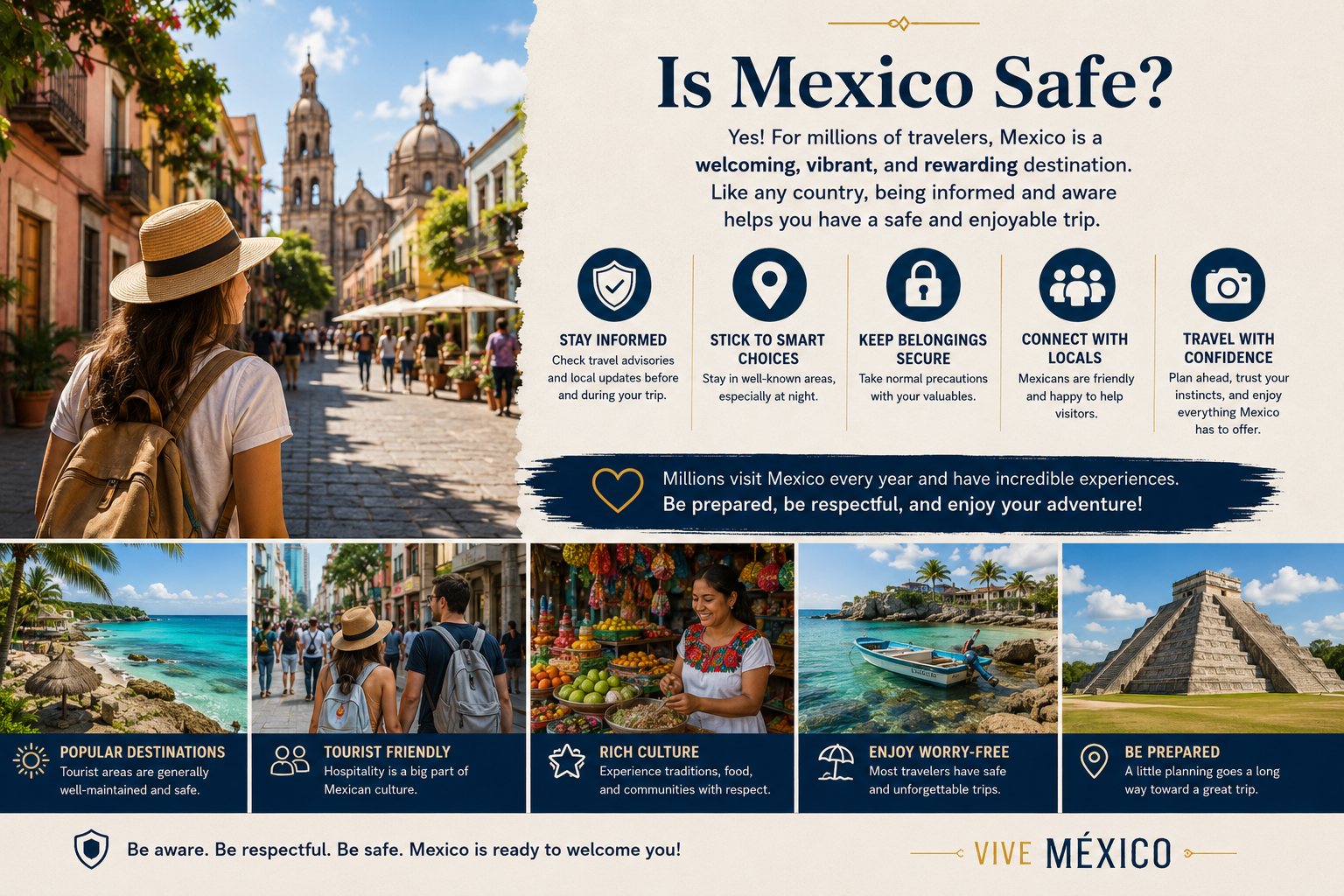
Mexico can be safe for many travelers when the itinerary is built around current advisories, well-understood routes, careful transport, and realistic neighborhood choices. It is not useful to say "Mexico is safe" or "Mexico is dangerous" as one blanket answer. Mexico is a large country, and safety changes by state, city, neighborhood, road, and season.
For most first-time visitors, the lowest-friction practical choice is usually to stick to well-traveled destinations such as Mexico City tourist neighborhoods, Oaxaca City, Mérida, Cancún Hotel Zone, Playa del Carmen, Cozumel, Isla Mujeres, Puerto Vallarta tourist areas, San Miguel de Allende, and Los Cabos resort areas. That does not mean nothing can happen there. It means the travel infrastructure is easier, the routes are common, and you are not auditioning for a bad decision in a place you do not understand.
My honest answer: Mexico is not a place to act invincible, but it is also not a place you need to fear if you plan well. I live here, I travel here, and I still check current advisories before unfamiliar routes. That habit is not dramatic. It is just smart.
Safety note: This guide is general travel planning, not a guarantee of safety. Check official advisories close to your departure date and again before moving between regions.
Is Mexico Safe: Quick Answer
| Question | Practical answer |
|---|---|
| Is Mexico safe for tourists? | Often yes in major tourist areas, but risk varies sharply by region. |
| Easier first-timer choices | Mérida, Oaxaca City, Cancún Hotel Zone, Cozumel, Isla Mujeres, San Miguel, Puerto Vallarta tourist zones, Mexico City tourist neighborhoods |
| Biggest avoidable risks | Unlicensed taxis, late-night wandering, drugs, isolated roads, driving at night, flashing valuables |
| Best safety tools | Current advisories, reliable mobile data, official transport, hotel area research |
| What to check before booking | State-level advisory, neighborhood, airport transfer, road route, recent local news |
Useful planning links:
- Mexico safety hub
- Mexico travel guide
- Where to stay in Mexico
- Mexico itinerary
- Cancún safety guide
- Playa del Carmen safety guide
- Tulum safety guide
- Mexico City safety guide
The Important Part: Mexico Safety Is Regional
This is the part I wish every first-time visitor understood before asking, "Is Mexico safe?"
Mexico is not one uniform risk zone. A resort strip in Cancún, a residential neighborhood in Mexico City, a highway in a restricted state, a remote beach road, and a busy Oaxaca market are completely different safety contexts.
Official advisories usually break Mexico down by state because the risk is not the same everywhere. Some states or areas may be listed with strong warnings while tourist areas in other states continue to receive visitors every day.
That is why your question should not only be "Is Mexico safe?" It should be:
- Is this specific destination safe enough for my trip?
- Is this hotel in the right area?
- Is this transfer route straightforward?
- Am I arriving late at night?
- Do current advisories mention this state or road?
- Am I planning anything that adds avoidable risk?
Safer Mexico Destinations For First Timers
No destination is risk-free, but these places tend to be easier for first-time visitors because they have established tourism infrastructure.
| Destination | Why it works | Main caution |
|---|---|---|
| Mérida | Calm city feel, strong visitor infrastructure | Heat and road-trip planning |
| Oaxaca City | Walkable center, culture-focused travel | Book trusted transport at night |
| Cancún Hotel Zone | Resort infrastructure, easy airport access | Petty theft, nightlife judgment |
| Playa del Carmen | Easy Riviera Maya base | Watch crowds, beaches, and late-night areas |
| Cozumel | Island tourism, diving / snorkeling infrastructure | Ferry logistics and scooter safety |
| Isla Mujeres | Small island, simple trip style | Golf cart safety and ferry timing |
| Mexico City tourist neighborhoods | Excellent food, museums, hotels | Phone theft, traffic, neighborhood choice |
| Puerto Vallarta tourist zones | Walkable center, beach town infrastructure | Nightlife judgment and beach conditions |
| San Miguel de Allende | Slow inland city, visitor-friendly center | Hills, cobblestones, late-night transport |
| Los Cabos resort areas | Polished tourism infrastructure | Not all beaches are swimmable |
I would not call any place "perfectly safe." That phrase makes me nervous. I would say these are easier places to plan responsibly.
Areas Tourists Should Research Carefully
I am not going to publish a casual "never go here" list because advisories change and Mexico is more nuanced than that. But tourists should be especially careful with:
- States or regions listed under strong government travel warnings.
- Border areas you do not already understand.
- Remote highways, especially at night.
- Isolated beaches without transport plans.
- Unfamiliar nightlife zones.
- Places where your only source of advice is a viral social media post.
Check official sources before booking:
- U.S. Department of State Mexico Travel Advisory
- Government of Canada Mexico travel advice
- Your own country's foreign travel advice if you are not American or Canadian.
If an advisory says to avoid or reconsider travel to a state, take that seriously. Do not assume a cheap hotel or pretty beach overrides it.
Common Tourist Risks In Mexico
Most visitor problems are not movie-style danger. They are ordinary travel problems made worse by poor decisions.
Petty Theft
Phone theft, bag theft, pickpocketing, and distraction scams can happen in busy tourist areas, markets, public transport, nightlife zones, and beaches. Keep your phone low-key, do not hang bags on chairs, and do not leave valuables unattended on the sand.
Taxi And Transport Issues
Use official airport taxis, hotel-arranged transport, reputable transfer companies, or rideshare where it operates reliably. Avoid random unlicensed taxis, especially late at night or outside transport hubs.
For families, late arrivals, or long transfers, prebooking is often worth it. It is not glamorous travel advice. It is the kind that prevents your first night from becoming a mess.
Nightlife Mistakes
Alcohol changes risk fast. So do unfamiliar streets, beach clubs, new friends, and a dead phone battery. Go out with a plan to get back. Keep your drink in sight. Do not accept packages or favors from strangers. Avoid drugs completely; they create legal and safety risks tourists often underestimate.
Driving And Road Safety
Driving can be fine in some areas and a bad idea in others. Do not drive at night between cities. Watch for speed bumps, checkpoints, toll roads, poor lighting, animals, aggressive passing, and confusing local road behavior.
If your trip depends on a rental car, read current route advice before booking. This matters for Yucatan road trips, Baja routes, Oaxaca coast routes, and long cross-country plans.
Beach And Water Safety
Not every beach in Mexico is swimmable. This is especially important in parts of the Pacific and Baja, where currents can be dangerous even when the beach looks calm.
On the Caribbean side, check seaweed, currents, and weather. For cenotes and snorkeling, use life jackets when recommended and do not overestimate swimming ability.
Safety Tips That Actually Help
| Situation | Safer choice |
|---|---|
| Arriving after dark | Prebook transfer or use official taxi |
| Choosing a hotel | Prioritize safe, central area over tiny price savings |
| Moving between cities | Travel during daylight when possible |
| Going out at night | Use trusted transport back |
| Carrying money | Use small amounts daily, leave backup cards secured |
| Using your phone | Keep it close in crowds and near roads |
| Beach day | Do not leave valuables unattended |
| Road trip | Check current route, avoid night driving |
| Emergency prep | Keep phone data working with roaming, a local SIM, or another non-affiliate option |
What I Would Do For A First Trip
If I were planning a first trip for a friend who was nervous about safety, I would keep it simple:
- Fly into Mexico City and stay in Roma, Condesa, Reforma, Juárez, or Polanco.
- Use guided tours or trusted transport for bigger first-day logistics.
- Continue to Oaxaca City or fly to Cancún.
- On the coast, stay in Cancún Hotel Zone, Playa del Carmen, Cozumel, Isla Mujeres, or a well-reviewed resort.
- Avoid long night transfers and remote improvising.
That route is not the only safe way to visit Mexico. It is just a sensible first-timer plan with fewer avoidable complications.
Phone Data And Emergency Prep
Keep emergency medical, consular, and policy information accessible offline if you already have coverage. This safety page does not link to insurance, booking, or eSIM offers.
Phone data is also a safety tool. You want maps, translation, hotel contact, rideshare, airline alerts, and emergency communication working when you need them. Arrange a reliable non-affiliate mobile data option before arrival.
Check current state-level advisories before booking.
Reality Check
This page should never be used to reassure someone into ignoring official warnings. Mexico has real violent crime, kidnapping, extortion, armed robbery, and cartel-related violence in some areas, and bystanders have been hurt in places tourists use. At the same time, many major visitor routes operate normally when planned with care. Both things can be true.
The useful question is not "safe or unsafe?" It is: which state, which neighborhood, which road, what time, what transport, what recent advisory, and what behavior?
FAQ
Is Mexico safe right now?
Mexico safety depends on the exact destination and current conditions. Many major tourist areas continue to receive visitors, but some states and routes carry serious advisories. Check official government travel advisories close to your departure date and plan by state, city, and route rather than treating Mexico as one single risk level.
What areas should tourists avoid in Mexico?
Tourists should avoid or carefully reconsider areas under strong official travel warnings, unfamiliar remote roads, isolated nightlife zones, and places where they do not have reliable local information. Always check current state-level advisories from your government before booking.
Is Mexico safe for solo female travelers?
Many solo female travelers visit Mexico safely, especially in well-traveled areas, but planning matters. Choose central hotels, avoid arriving late without transport, keep phone data working, be careful with nightlife, and use trusted transport. Oaxaca, Mexico City tourist neighborhoods, Mérida, Puerto Vallarta, and parts of the Riviera Maya are common choices for experienced solo travelers.
Is Mexico safe for families?
Mexico can be a good family destination when you choose easy logistics. Cancún, Playa del Carmen, Cozumel, Puerto Vallarta, Mérida, and resort areas are common family choices. Prioritize hotel location, pool / beach safety, medical access, and reliable airport transfers.
Is it safe to rent a car in Mexico?
It can be safe in some regions, especially common tourist routes in Yucatan, Quintana Roo, Baja, and parts of central Mexico, but it depends on the route. Avoid night driving between cities, check current road conditions, understand insurance, and do not take remote routes based only on a map.
Sources and verification
Safety guidance changes. Check these official sources again before booking and shortly before departure.
U.S. Department of State: Mexico Travel Advisory
Check the current state-level advisory and regional guidance before travel.
Government of Canada: Mexico travel advice
Independent government travel advice covering safety, entry, and regional conditions.
UK FCDO: Mexico travel advice
Review current regional safety, transport, and local-law guidance.