Oaxaca Travel Guide
 By Ana Sofia Rivera - Mexican local author, Oaxaca & the South - Updated 01 Jun 2026
Short on time
- Guide Best Day Trips from Oaxaca - Start here
- Guide Oaxaca Itinerary - Start here
- Guide Things to Do in Oaxaca - Start here
Editorial rankings are independent and not for sale.
Plan Oaxaca City with an honest guide to where to stay, food, markets, Monte Albán, mezcal villages, festivals, safety, roadblocks, costs, and timing.
Oaxaca is best when you give it room. Not because it is sleepy, but because its strongest experiences are not improved by rushing: a market breakfast, the stone geometry of Monte Albán, a weaver explaining natural dyes, a mezcal palenque, the smell of comal smoke, the sudden music of a calenda turning a street corner. If you try to turn the city into a checklist, Oaxaca will still be beautiful, but you will miss the part that breathes.
This Oaxaca travel guide focuses on Oaxaca City and the Central Valleys: Centro, Jalatlaco, Xochimilco, Monte Albán, nearby artisan villages, mezcal routes, markets, museums, and classic day trips. It does not cover the coast in detail. Puerto Escondido, Mazunte, Zipolite, and Huatulco are another trip with different weather, transport, safety questions, and pace.
Fast answer:
| Best choice | Recommendation | Why | Watch out for |
|---|---|---|---|
| Best base | Centro or Jalatlaco for first-timers | Walkable food, museums, tours, evening life | Noise, festival crowds, higher rates |
| Best trip length | 4 nights / 3 full days minimum | Enough for city, Monte Albán, and one valley day | Two nights feels rushed |
| Best first activity | Walk Centro + markets | Helps you understand the city before leaving it | Ask before photographing people |
| Best day trip | Monte Albán or a curated village / mezcal route | Strong history and cultural context | Heat, crowds, and rushed tours |
| Best season | November-February for weather, July for Guelaguetza, late Oct / early Nov for Día de Muertos | Dry / cooler weather or festival atmosphere | Higher prices and noise |
| Biggest mistake | Stacking too many villages / markets / mezcal stops | Everything becomes a blur | Choose fewer things and listen better |
Last reviewed: July 2026. Recheck official advisories, road conditions, protest / roadblock news, site hours, Guelaguetza / Día de Muertos logistics, tour reviews, and hotel construction before booking.
What This Guide Covers
When travelers say “Oaxaca,” they often mean three different things:
- Oaxaca City, the capital and main cultural / food base.
- The Central Valleys, including Monte Albán, Teotitlán del Valle, Mitla, Tlacolula, mezcal towns, and artisan villages.
- Oaxaca state, which also includes mountains, the Mixteca, the Isthmus, and the Pacific coast.
This guide is mainly the first two. That matters because Oaxaca City is not close to the coast in the casual way maps make people believe. The drive to Puerto Escondido is faster than it used to be on the newer highway, but it is still a separate coastal chapter, not an afternoon beach break from Centro.
For a first trip, build your plan around Oaxaca City. Let the valleys be day trips. Do not try to “do Oaxaca” from the city to the coast and back in one breath unless you enjoy seeing Mexico from a car window.
Who Oaxaca Is Best For
Oaxaca works beautifully for travelers who care about food, craft, history, markets, walking, mezcal, and culture that is still lived rather than staged. It is one of Mexico’s richest destinations, but it is not frictionless.
It is best for:
- Food travelers who want markets, moles, tamales, chocolate, mezcal, and long meals.
- Culture-focused travelers who will treat villages, artisans, and ceremonies with respect.
- Couples and friends who like walking, cafes, galleries, and slow evenings.
- Solo travelers comfortable with city awareness and organized day trips.
- Repeat Mexico travelers ready for something deeper than resort ease.
It is less ideal for:
- Travelers who need beaches on the same trip.
- Anyone who hates walking on uneven streets.
- People who want everything polished, air-conditioned, and predictable.
- Visitors who treat Indigenous communities as photo backdrops.
- Travelers who cannot tolerate protests, road delays, noise, or festival crowds.
That last line is not meant to scare you. It is meant to be honest. Oaxaca is generous, but it is not a theme park.
How Many Days You Need
For most first-time visitors, I would plan four nights:
| Time | Best use |
|---|---|
| 2 nights | Very short taste: Centro, markets, one major site |
| 3 nights | Better: Centro, Monte Albán, one food / craft / mezcal day |
| 4-5 nights | Strong first trip with a slower rhythm |
| 6-7 nights | Good for cooking class, more villages, museums, rest, and repeat meals |
Two nights can be beautiful, but it becomes a postcard. Four nights lets Oaxaca become a place. That difference matters here.
Best Time To Visit Oaxaca
November through February is the easiest weather window for many travelers: cooler mornings, drier days, and comfortable walking. March through May can be hot and dusty. June through September brings rainy-season green, afternoon showers, lower prices in some periods, and humid evenings. October and early November are powerful because of Día de Muertos, but also crowded and expensive.
Festival timing deserves its own honesty:
- Día de Muertos is beautiful and emotionally intense, but not a private show for tourists. Book early, move gently, and ask before photographing people, altars, or cemetery moments.
- Guelaguetza is Oaxaca’s major July cultural festival. For 2026, official state materials list the main Lunes del Cerro dates as July 20 and July 27, with ticket sales announced to begin June 1. Expect high demand, higher hotel rates, and more events around the city.
- Semana Santa, Christmas / New Year, and long weekends can also raise prices and fill small hotels.
Rainy season is not automatically bad. A late-afternoon storm can wash the stones clean and leave the city smelling of earth. But if your plan depends on a distant day trip, leave margin.
Where To Stay
For first-timers, I would start with Centro, Jalatlaco, Xochimilco, or the calmer edge of Reforma.
| Area | Best for | Watch out for |
|---|---|---|
| Centro / Santo Domingo | First-timers, food, museums, walking | Noise, crowds, higher rates |
| Jalatlaco | Boutique stays, cafes, color, quieter evenings | Limited inventory, rising prices |
| Xochimilco | Older charm, calmer stays, longer visits | More walking; some uphill routes |
| Reforma | Calm, parking, families, business travelers | Less atmospheric for a short first trip |
| Nearby villages | Retreats, workshops, longer stays | Not ideal without transport |
Centro is convenient, but not always quiet. Oaxaca has fireworks, bells, music, weddings, processions, dogs, vendors, and festival nights. If you are sensitive to sound, choose room position carefully and read recent reviews.
Jalatlaco is lovely, but its popularity has changed it. It is not a secret neighborhood anymore. Xochimilco feels older and quieter in places, but your daily walking plan matters. Reforma is practical, especially with a car or family, but it can feel removed from the city you came to see.
What To Do First
Give your first day to the city itself:
- Walk Santo Domingo and the surrounding streets.
- Visit the Zócalo without treating it as only a photo stop.
- Eat in a market or simple comedor.
- Find coffee or chocolate in the afternoon.
- Visit a museum or gallery if your energy is good.
- Make dinner easy and close to your hotel.
I would not put a 10-hour valley tour on your arrival day. Oaxaca rewards presence. Start close.
Essential Experiences
1. Monte Albán
Monte Albán is the essential first archaeological site for Oaxaca City. The official INAH page identifies it as the former capital of Zapotec culture and one of Mesoamerica’s most important cities. The site sits above the valley, and the scale only really makes sense when you stand there and see the mountains around it.
Go early for cooler weather and fewer crowds. Bring water, sun protection, and enough time to move slowly. A guide can be worth it here because the site is not only stone; it is political, astronomical, urban, and sacred history layered together.
2. Markets And Food
Oaxaca’s food is not a single dish. It is a system of ingredients, techniques, regions, markets, family knowledge, and Indigenous memory. Start with markets, but behave like a guest. Mercado 20 de Noviembre, Benito Juárez, and smaller neighborhood markets can be wonderful, but they are working places, not sets.
Eat tlayudas, memelas, tamales, tejate, chocolate, mole, barbacoa, pan de yema, and whatever the cook recommends. Do not let online lists make you rigid. Sometimes the best meal is the one in front of you, hot from the comal, not the reservation everyone is chasing.
3. Museums And Churches
Santo Domingo is the major visual anchor, but do not rush the surrounding cultural spaces. Oaxaca’s museums, galleries, and courtyards help you understand the city beyond restaurants and shopping. Check opening days before going; museum schedules can change, and Monday closures catch many visitors.
4. Artisan Villages
Teotitlán del Valle, San Martín Tilcajete, San Bartolo Coyotepec, Santa María Atzompa, and other villages are not interchangeable souvenir stops. Each has its own history, materials, family workshops, and politics of tourism. Go with a good guide or go slowly enough to understand what you are seeing.
Buy directly when you can. Ask before taking photos. Do not bargain like the goal is to win. A handwoven rug or carved alebrije is not the same thing as a mass-produced trinket.
5. Mezcal
Mezcal tours can be excellent or shallow. The better ones explain agave, land, labor, fermentation, distillation, family traditions, and why “smoky tequila” is a lazy description. Drink less than the tour pours if you want to remember the afternoon.
If a tour tries to fit too many palenques, a village lunch, Mitla, Hierve el Agua, and shopping into one day, ask what gets sacrificed. Usually the answer is depth.
6. Hierve el Agua
Hierve el Agua is beautiful, but it is also one of the places where expectation and reality can fight. The mineral formations and valley views are memorable. The road, crowds, access rules, water level, and timing can vary. Go early, use a well-reviewed operator or driver, and do not build your whole Oaxaca trip around one overfiltered image.
How To Plan Day Trips Without Flattening Them
Oaxaca day trips fail when they try to make every village a checkbox. The Central Valleys are close enough for full days, but not close enough for magic teleportation. Roads, lunch, workshop conversations, shopping, photos, and mezcal tastings all take time.
A strong valley day usually has one clear theme:
| Theme | Better focus |
|---|---|
| Archaeology | Monte Albán, or Mitla with regional context |
| Craft | One or two villages with real workshop time |
| Mezcal | One or two palenques with time to understand process |
| Market | Tlacolula on Sunday, with lunch and church / market context |
| Landscape | Hierve el Agua with an early start and realistic road time |
The weaker tours try to do everything: Mitla, Tule, Teotitlán, Hierve el Agua, mezcal, a buffet lunch, shopping, and a rushed guide speech while everyone is already tired. It may be cheap. It may also leave you with photos but no memory of texture.
If your budget allows, a smaller tour or private driver can be worth it. Not because luxury is necessary, but because the best parts of Oaxaca often happen in conversation. A weaver explaining cochineal, a mezcalero talking about fermentation, a cook telling you why one chile matters more than another. Those moments need time.
Food Strategy
Do not build your Oaxaca food plan only around famous restaurants. They can be excellent, and some are worth booking, but Oaxaca’s food life is wider than a reservation calendar.
I would plan food in layers:
- One market breakfast.
- One simple comedor or fonda lunch.
- One nicer dinner if your budget allows.
- One chocolate or tejate stop.
- One meal that is not from a list, chosen because it smells good and people are eating happily.
This keeps the trip from becoming performance tourism. You do not need to prove you ate every mole. You need to taste with attention. If a restaurant has become famous online, read recent reviews carefully. The complaint pattern I watch for is not “too expensive” by itself; good labor and good ingredients deserve payment. I watch for repeated comments about rushed service, watered-down experience, or a room full of tourists being moved through like a machine.
Markets also deserve care. Ask before photographing vendors. Do not block aisles. If you sit in a market stall, order something and be present. The best market meal is not always the one with the longest line from Instagram.
Buying Crafts Without Regret
Oaxaca is one of the best places in Mexico to buy handmade work, but it is also one of the easiest places to buy quickly and misunderstand what you are taking home. Textiles, ceramics, alebrijes, tin work, baskets, and natural-dye pieces carry time. Sometimes generations of it.
Before buying, ask simple questions:
- Who made this?
- Is it made here or brought from elsewhere?
- What materials are used?
- How long does it take?
- Can I photograph the work or the artisan?
- How should I pack or care for it?
You do not need to interrogate anyone. Just be curious. If the answer feels rushed or vague, slow down. If the piece is very cheap compared with the labor described, ask yourself who is absorbing that discount.
I do bargain sometimes in Mexico, but not as a sport. With handmade work, I prefer to ask if there is a better price for buying more than one piece, or simply pay the price if it is fair. The goal is not to win a negotiation. The goal is to leave with something you understand.
Cultural Respect
Oaxaca is Indigenous, mestizo, urban, rural, Catholic, communal, commercial, ceremonial, political, and creative all at once. It is not one aesthetic. If you come only for colors, you will see colors. If you come with attention, you will notice relationships.
Basic respect:
- Ask before photographing people.
- Be especially careful around Día de Muertos altars and cemeteries.
- Do not interrupt ceremonies or processions for photos.
- Learn the difference between handmade work and resale.
- Pay artisans fairly.
- Tip guides and drivers when service is good.
- Do not treat villages as theme stops.
- Remember that mezcal and textiles carry land, labor, and family knowledge.
This is not about being stiff. It is about being invited into a place without acting like everything is yours.
Getting Around
In Oaxaca City, you will walk a lot. That is part of the pleasure. The center is compact, but streets are uneven, sidewalks narrow, and heat can make distances feel longer.
Arrival And First Night
Oaxaca International Airport is close enough to the city that arrival can feel simple, but I still would not over-plan the first night. Use an authorized airport taxi, hotel-arranged transfer, or trusted ride option, then make dinner close to your hotel. Save the ambitious reservation for the next evening, when you know your walking route and have recovered from the flight or bus.
If you arrive by bus from Mexico City, Puebla, or the coast, check the station location and late-night taxi plan before you travel. Oaxaca is not enormous, but arrival fatigue makes small mistakes louder. Keep your hotel address saved offline in Spanish, and if your hotel is inside a pedestrian / event-affected area, ask where the driver should drop you.
For movement beyond the center, use:
- Taxis for simple city rides.
- Private drivers for flexible valley days.
- Small-group tours for Monte Albán, craft villages, mezcal, or Hierve el Agua.
- Colectivos and local buses if you are budget-focused and patient.
- Airport taxis / transfers for arrival and departure simplicity.
Roadblocks and demonstrations can happen in Oaxaca and can affect routes, especially highways and access to some areas. Canada advises travelers in Mexico to avoid demonstrations and monitor local media because they can disrupt traffic and transportation. This matters more for tight transfers than for relaxed city days.
Safety Context
Most visitors who stay in central Oaxaca City, use normal awareness, and plan transport sensibly have smooth trips. But Oaxaca state is not one uniform risk zone.
As of this review, the U.S. State Department places Oaxaca state at an increased-caution level and notes there are no U.S. government employee travel restrictions for Oaxaca City, Monte Albán, Puerto Escondido, Huatulco, and some major routes, while restricting travel to other areas / routes. Canada advises a high degree of caution in Mexico overall and flags demonstrations, crime, and transportation disruption.
Practical safety habits:
- Stay in well-reviewed central areas for a first trip.
- Use taxis or trusted transport late at night.
- Avoid isolated walks after drinking.
- Check current road / protest news before long transfers.
- Keep cash divided and cards secure.
- Confirm tour pickup points clearly.
- Do not assume advice for Oaxaca City applies to every mountain or coast route.
I would not call Oaxaca City scary. I would call it a real city in a real state, which deserves current information.
Costs And Budget
Oaxaca is no longer the ultra-cheap secret some old travel writing describes. You can still travel affordably, especially if you eat in markets, use simple hotels, and move by colectivo. But boutique hotels, tasting menus, mezcal tours, festival dates, and guided artisan routes can become expensive quickly.
Budget pressure points:
- Día de Muertos and Guelaguetza hotel rates.
- Small boutique hotel inventory.
- Private drivers for valley routes.
- Higher-end restaurants and tasting menus.
- Quality textiles, ceramics, and carved wood.
- Airport transfers and late-night taxis.
Spend where it changes the trip: a good guide, a better location, a quieter room, a fair purchase from an artisan, or a tour that does not rush every stop.
When I Would Skip Or Delay Oaxaca
I would delay Oaxaca if:
- You only have one rushed night.
- You need beach time more than city / culture time.
- Festival rates are high and you do not care about the festival.
- You cannot tolerate heat, walking, stairs, or noise.
- You are trying to combine Oaxaca City, the coast, and several villages with no slack.
- Current roadblocks or weather make your exact route fragile.
Oaxaca will still be here. It is better to come with enough time to listen.
Suggested First Trip
For a simple four-night first trip:
| Day | Plan |
|---|---|
| Arrival | Check in, short Centro walk, easy dinner |
| Day 1 | Santo Domingo, markets, museums, slow food day |
| Day 2 | Monte Albán in the morning, quiet afternoon, dinner |
| Day 3 | Artisan villages, mezcal, or Mitla / Hierve el Agua with a good guide |
| Departure | Breakfast near hotel, airport / bus with margin |
If you add one more day, do not automatically add more stops. Add breathing room: a cooking class, more market time, a second museum, or a return to a place that stayed with you.
Helpful Next Reads
FAQ
How many days do you need in Oaxaca?
Plan at least three full days if you can. Four nights is a better first trip because it gives you time for Oaxaca City, Monte Albán, one valley / craft / mezcal day, and some unplanned wandering.
Is Oaxaca City safe for tourists?
Oaxaca City is generally manageable for visitors who stay in central areas, use normal city awareness, and plan transport carefully. Still, check current advisories and road / protest conditions because Oaxaca state has areas and routes that require more caution.
What is Oaxaca best known for?
Oaxaca is known for food, markets, mezcal, textiles, ceramics, wood carving, Monte Albán, Santo Domingo, Indigenous cultures, festivals, and a strong sense of place that goes far beyond a simple weekend checklist.
Is Oaxaca expensive?
Oaxaca can be affordable, but it is not as cheap as older travel advice suggests. Boutique hotels, festival dates, guided tours, tasting menus, and quality handmade crafts can raise the budget quickly.
Should I visit Oaxaca during Día de Muertos?
Yes, if you understand that it is a living tradition, not a tourist performance. Book early, expect crowds and high rates, ask before photos, and move with respect around families, altars, and cemeteries.
Explore Oaxaca Travel Guide
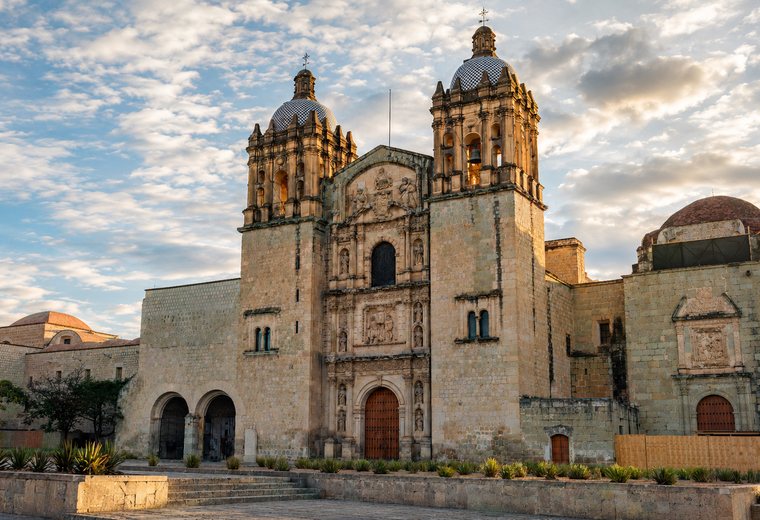
Best Day Trips from Oaxaca
Choose Oaxaca day trips with honest route advice for Monte Albán, Mitla, Hierve el Agua, mezcal, artisan villages, markets, safety, and roadblocks.
Oaxaca Itinerary
Plan a realistic Oaxaca itinerary for 3, 4, 5, or 7 days with Monte Albán, markets, food, villages, mezcal, safety, and what to skip.
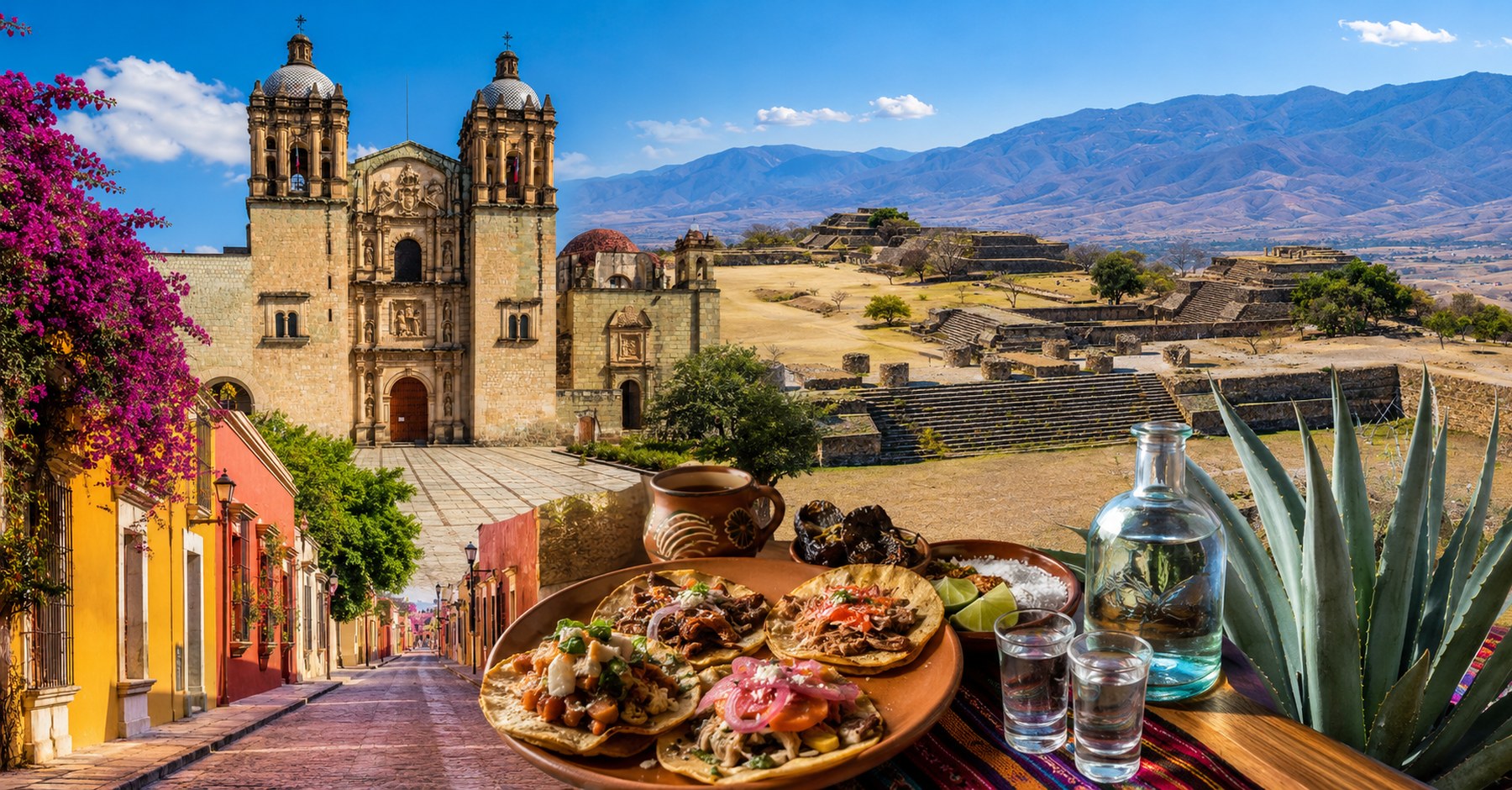
Things to Do in Oaxaca
The best things to do in Oaxaca, honestly ranked with Monte Albán, markets, food, mezcal, villages, Hierve el Agua, museums, festivals, safety, and what to skip.