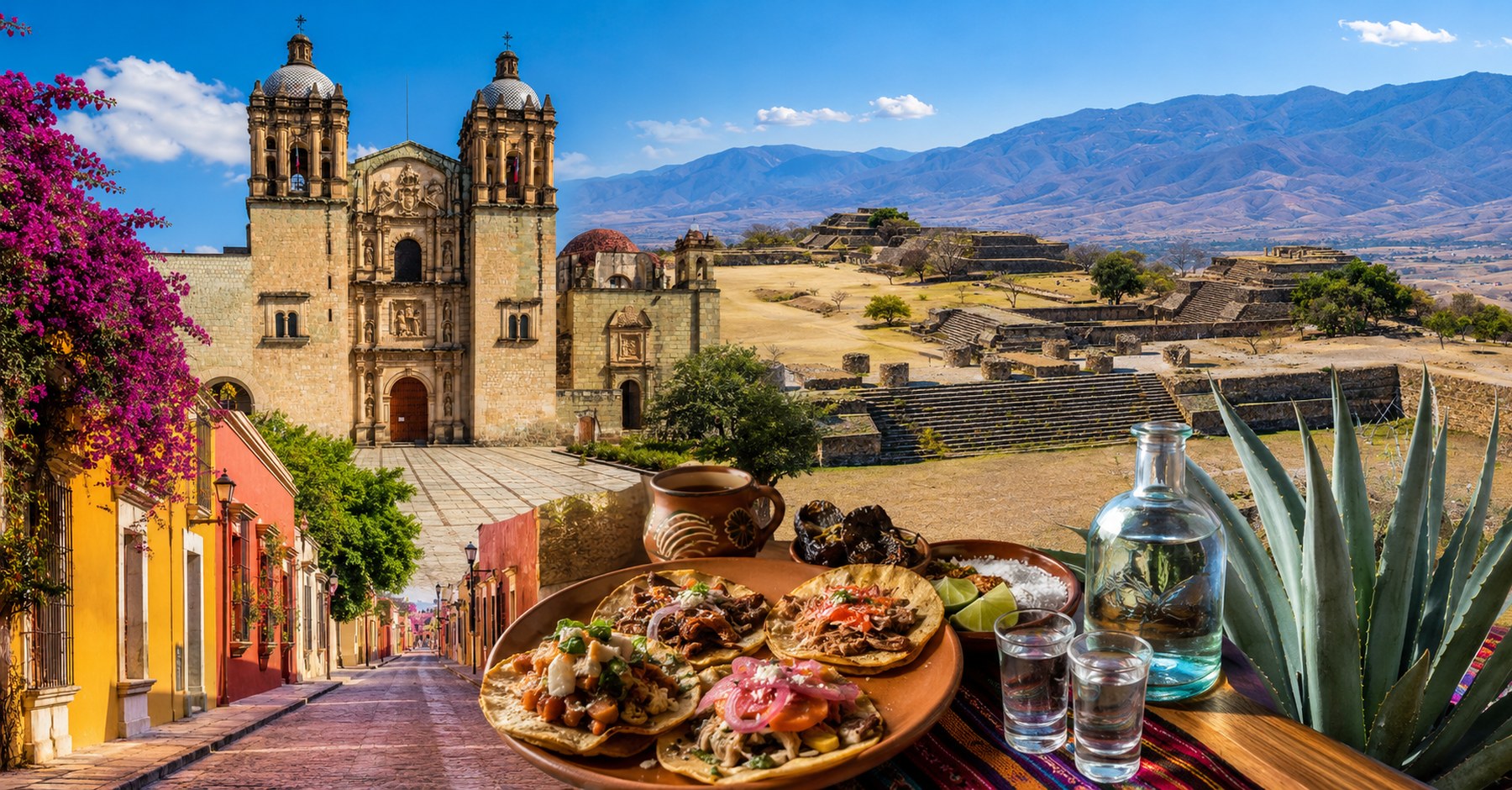
The best things to do in Oaxaca are not the most numerous. They are the ones you give enough time to understand: Monte Albán in the morning, markets without rushing, one serious food experience, one craft village done respectfully, Santo Domingo and the ethnobotanical garden, and maybe one bigger valley or nature day if your schedule can hold it.
Oaxaca is generous, but it does not perform well under pressure. If you try to stack Monte Albán, Hierve el Agua, Mitla, Teotitlán, a mezcal tasting, three markets, two museums, and a dinner reservation into two days, the city will not stop you. It will simply become flatter, noisier, and less meaningful. Qué pena. It deserved better.
Fast answer:
| Priority | Best thing to do | Best for | Honest caution |
|---|---|---|---|
| 1 | Monte Albán | First-timers, history, views | Go early; the sun is not gentle |
| 2 | Food and markets | Everyone, if paced well | Do not treat markets like a snack race |
| 3 | Santo Domingo + Centro | Easy first day, architecture, photos | Crowded around festivals |
| 4 | Jardín Etnobotánico | Plants, culture, design, shade-ish learning | Guided access and timing can be strict |
| 5 | East Valley villages | Textiles, Mitla, Tule, mezcal | Bad tours turn it into a conveyor belt |
| 6 | Hierve el Agua | Landscape, photos, longer day trips | Beautiful but often overhyped and logistically tiring |
| 7 | Mezcal palenque | Curious adults, culture, agave | Avoid party-bus energy |
| 8 | Museums and print shops | Rainy days, art, slower travelers | Check current hours |
Last reviewed: May 24, 2026. Recheck hours, access rules, tour quality, road conditions, protest / roadblock news, and current safety guidance before booking.
Quick Picks
| If you have… | Do this first | Then add |
|---|---|---|
| Half day | Santo Domingo, Centro walk, one market | Jalatlaco or Museo Textil |
| One full day | Monte Albán early, Centro / markets later | Dinner reservation or food walk |
| Two days | Monte Albán, food / markets, Santo Domingo | Jalatlaco / Xochimilco |
| Three days | Add East Valley or a cooking / mezcal day | Textile, pottery, or printmaking stop |
| Four or five days | Add Hierve el Agua, Tlacolula, or Sierra Norte | One slow day with no van tour |
1. Visit Monte Albán Early
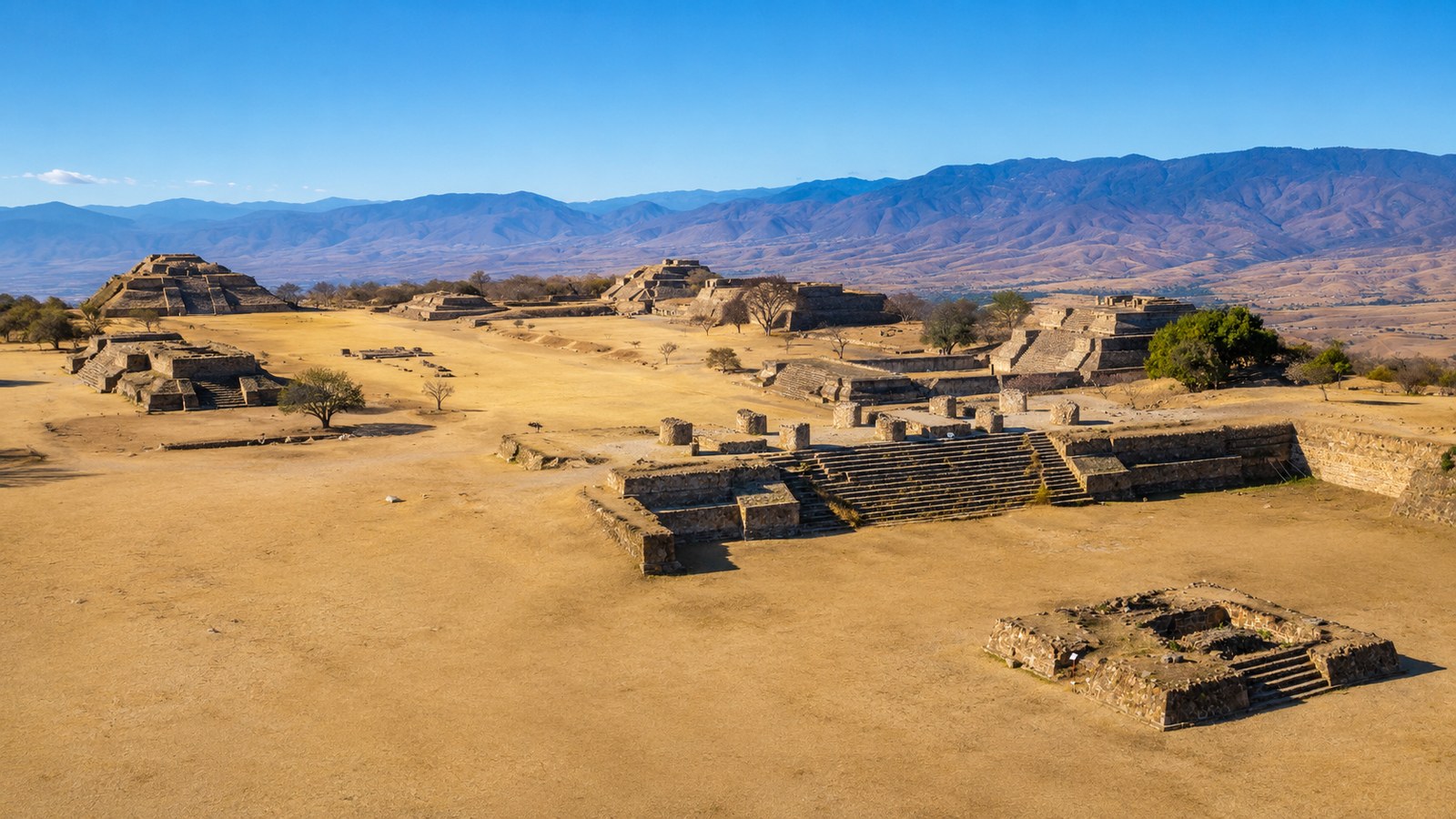
If you do only one major sight outside Oaxaca City, make it Monte Albán. INAH identifies it as one of the major archaeological zones near the city, and the site still has the rare power of place: broad plazas, carved stones, platforms, and a mountaintop view that explains why geography mattered before anyone invented a drone.
Go early. Not because everyone says “go early” in travel writing, but because the heat and light change the experience. By midday, the stone can feel harsh and the site starts to become a photo route instead of a place to think.
Best ways to visit:
| Option | Best for | Watch out for |
|---|---|---|
| Guided half-day tour | First-timers who want context | Avoid tours that rush the site |
| Taxi / private driver | Families, couples, flexible pacing | Confirm the return plan |
| Shared transport | Budget travelers | Less comfortable and less flexible |
| Rental car | Confident drivers | City traffic and parking friction |
Bring water, a hat, sunscreen, and shoes with grip. If you care about history, hire a guide or read before you go. Without context, Monte Albán can look like beautiful stones. With context, it becomes a city of power, ceremony, astronomy, and memory.
Worth it? Yes. Even if you are not a ruins person, this is the one I would protect.
2. Eat Your Way Through Oaxaca, Slowly
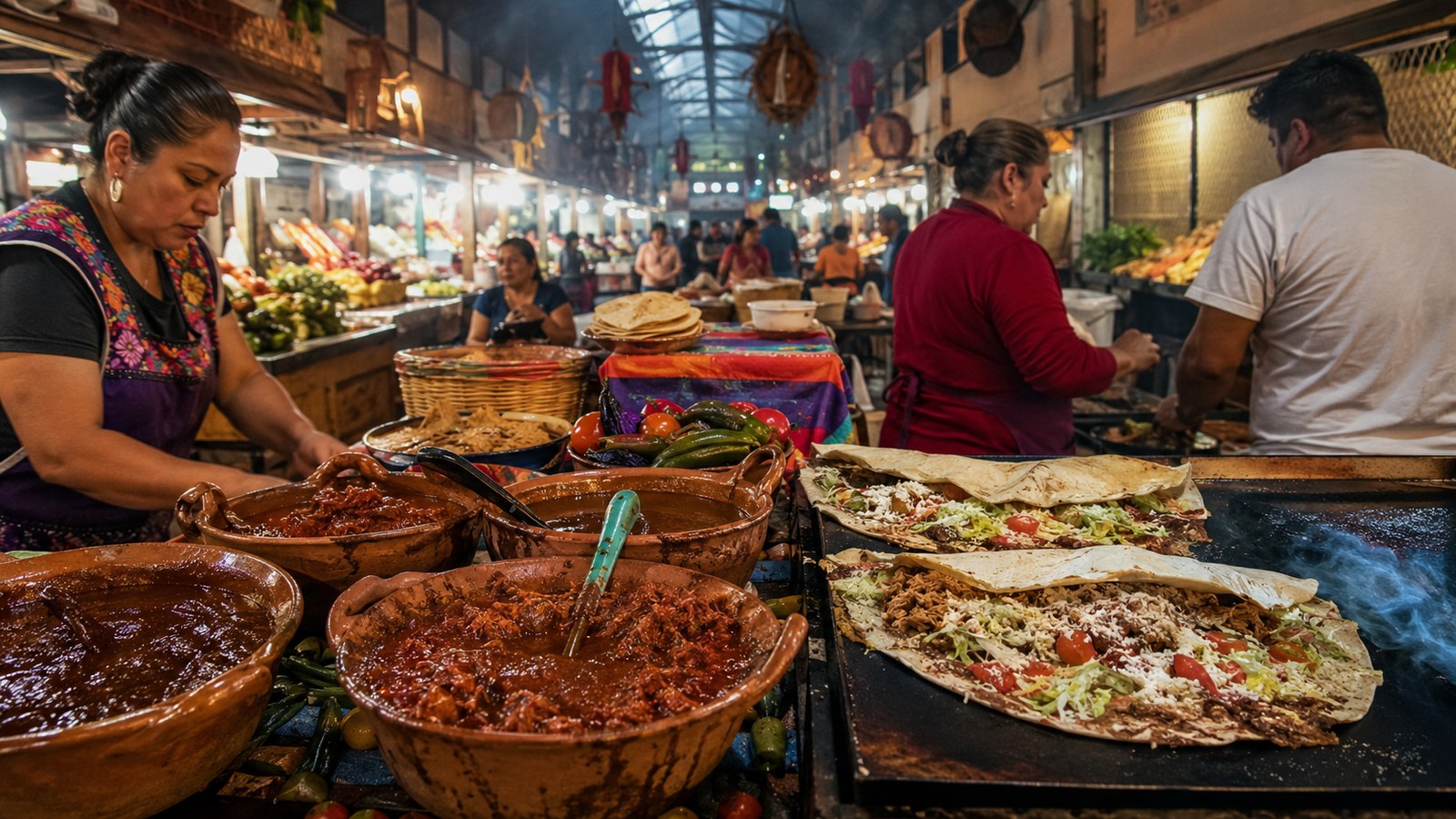
Oaxaca’s food is not a side activity. It is one of the main reasons to come. But the mistake is trying to turn it into a checklist: mole, tlayuda, memela, tamal, tejate, chocolate, mezcal, pan de yema, chapulines, nieves, all before lunch. Your stomach is not a museum archive.
Start with one market and one guided or semi-guided food experience if you want help. Benito Juárez and 20 de Noviembre are approachable for most visitors. The smoke hall in 20 de Noviembre is famous for grilled meats, but it is smoky, busy, and not magical for everyone. If smoke bothers you, choose another meal. Oaxaca has more than one way to feed you.
Food experiences worth considering:
- Market breakfast with hot chocolate or atole.
- A cooking class that starts in the market.
- A mole-focused meal with explanation, not just a pretty tasting plate.
- A street-food walk with a guide who understands context.
- Bakery stops for pan de yema and local sweet breads.
- Tejate in a market, especially if you want a taste of pre-Hispanic continuity in a cup.
Be gentle with markets. Ask before photographing people. Pay fairly. Do not block a working stall because the steam looks poetic on your phone. The steam has a job.
3. Walk Santo Domingo And The Historic Center
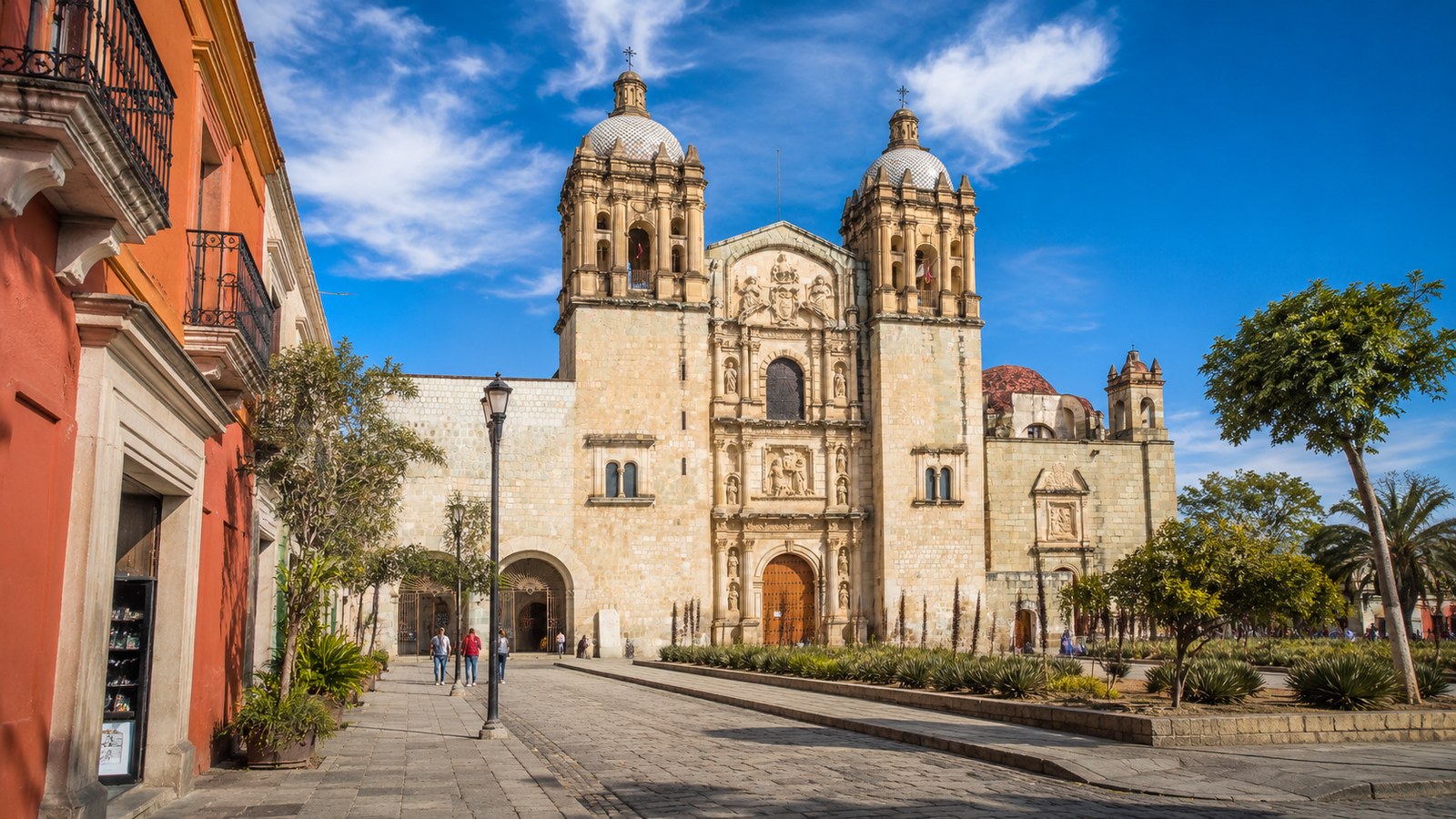
Santo Domingo de Guzmán is the visual heart of many first Oaxaca trips. The church, the former convent complex, nearby streets, galleries, courtyards, and cantera stone make this an easy first-day anchor. It is also where Oaxaca can feel most polished and most crowded, depending on the week.
Do this early or late if you want softer light and fewer tour groups. Around weddings, calendas, festivals, and weekend evenings, the plaza can become a living theater: brass bands, giant puppets, fireworks, children running, visitors filming, families trying to move through it all.
Good nearby pairings:
| Pair it with | Why |
|---|---|
| Jardín Etnobotánico | Same general Santo Domingo area |
| Museo de las Culturas | Strong historical context if open |
| Museo Textil | Smaller, quieter, excellent for craft context |
| Jalatlaco | Easy neighborhood continuation |
| A reservation dinner | Good end to a low-transport day |
Worth it? Yes, but do not let Centro become your whole Oaxaca. The city is not only its prettiest streets.
4. Visit The Jardín Etnobotánico
The Jardín Etnobotánico de Oaxaca is not just a cactus-photo stop. Oaxaca’s official tourism site describes the garden as part of the Santo Domingo cultural complex, created to represent and preserve the state’s plant diversity. That matters because Oaxaca is one of Mexico’s most biodiverse states, and the garden tells a story about plants, food, medicine, ritual, territory, and survival.
Access is usually by guided visit, and timing can be stricter than casual visitors expect. Check current schedules before building your day around it. Recent traveler complaints often come from people who assumed they could wander in whenever they liked. You usually cannot. This is not a shopping mall courtyard.
Go if you like:
- Plants and desert landscapes.
- Francisco Toledo’s cultural legacy.
- Architecture and design.
- Indigenous relationships with land and food.
- A quieter activity near Santo Domingo.
Skip if you hate guided visits, need full freedom to roam, or are traveling with children who cannot handle a structured tour.
5. Explore Jalatlaco And Xochimilco
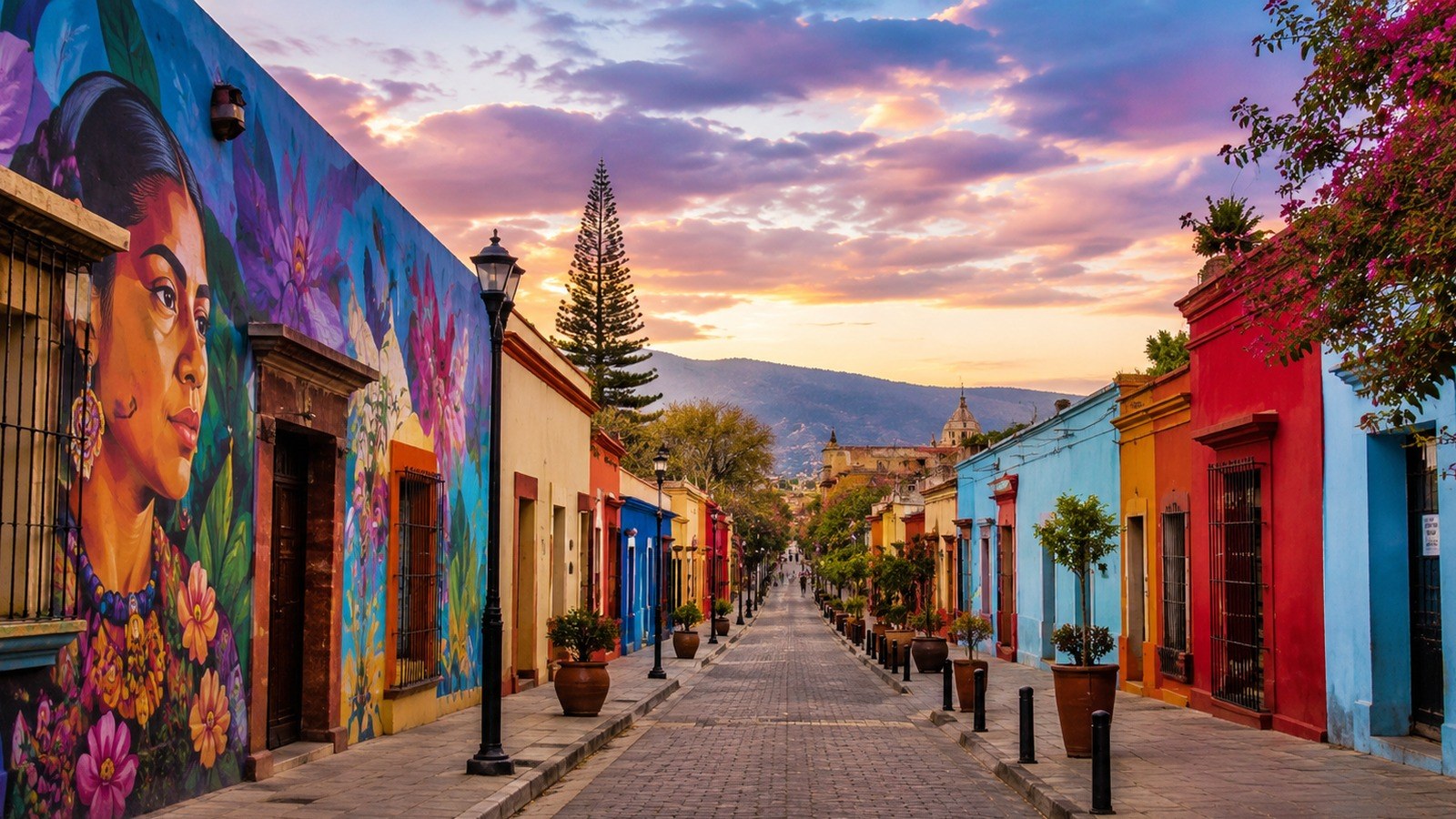
Jalatlaco and Xochimilco are often described as “colorful neighborhoods,” which is true but thin. Jalatlaco has cafes, murals, boutique hotels, and a photogenic softness that visitors love. Xochimilco feels older and quieter, with aqueduct traces, narrow streets, and a less polished beauty.
Go in the morning or late afternoon. Walk slowly. Buy coffee, bread, or a small lunch. Do not treat the neighborhoods as only backdrops. People live behind those painted walls.
Best for:
- First-trip wandering after a heavy morning.
- Couples.
- Photographers who can behave.
- Travelers who want a break from markets and tours.
- A low-cost day with good atmosphere.
Honest caution: Jalatlaco can feel very visitor-facing now. It is still lovely, but if you expect an untouched local secret, that moment passed.
6. Take An East Valley Day Trip
The classic East Valley route can include El Tule, Teotitlán del Valle, Mitla, a mezcal palenque, and sometimes Hierve el Agua. This can be one of the best days of the trip if paced well. It can also be the day when everything becomes a forced march.
Choose your version:
| Route | Best for | Caution |
|---|---|---|
| Tule + Teotitlán + Mitla | Craft / history focus | Better with context |
| Teotitlán + mezcal | Textiles and agave | Shop respectfully; do not pressure artisans |
| Mitla + Hierve el Agua | Archaeology and landscape | Long day, road time, crowds |
| Private craft route | Serious buyers, cultural travelers | Costs more but can be less performative |
| Group combo tour | Budget travelers | Often too many stops |
Teotitlán deserves more than a 20-minute weaving demonstration. Mitla deserves more than “the other ruins.” El Tule is a beautiful short stop, not a whole day. Mezcal deserves a guide who can explain agave and community, not only refill your cup.
7. Decide Honestly About Hierve el Agua
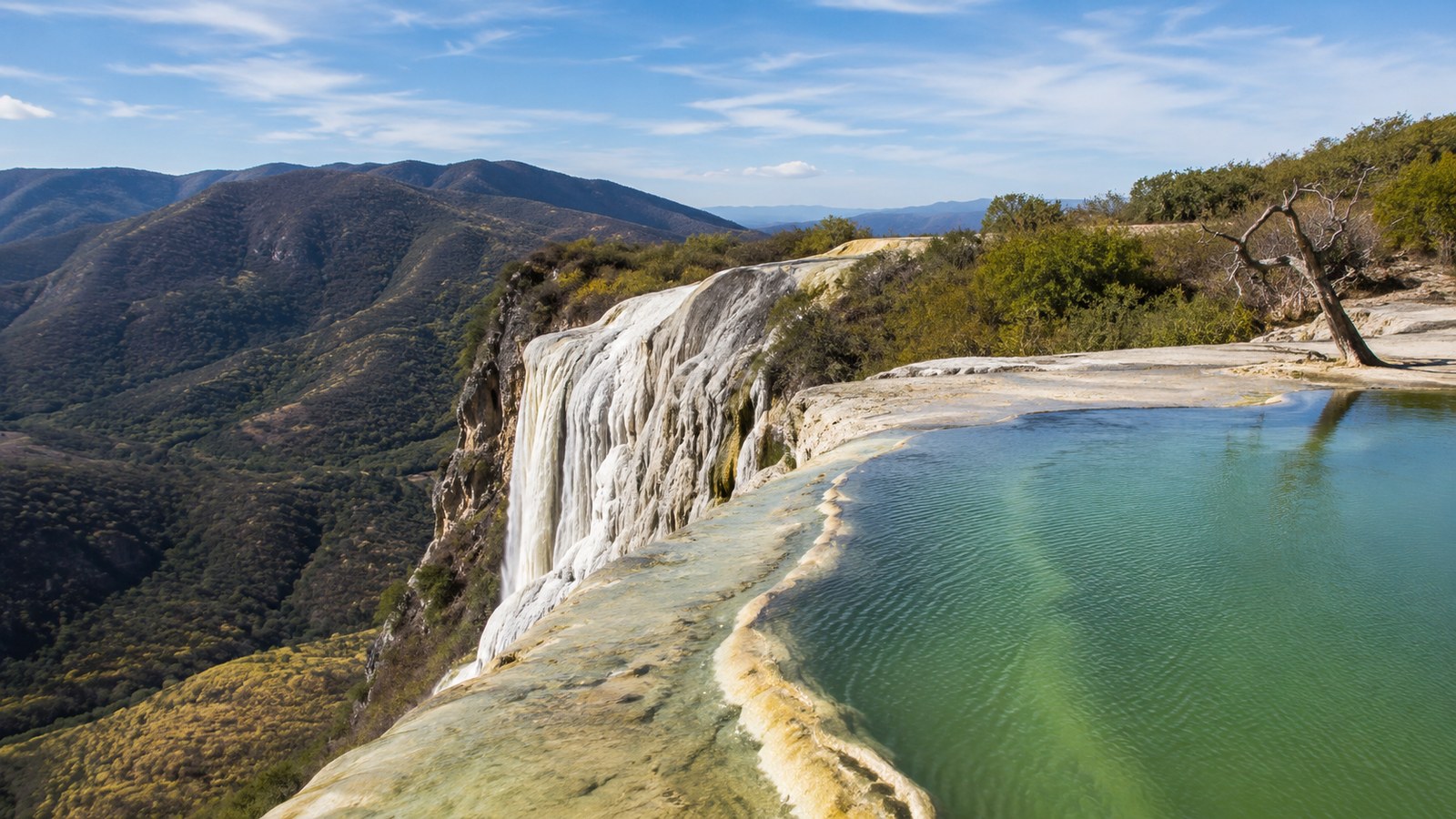
Hierve el Agua is beautiful: mineral formations like frozen waterfalls, valley views, pools, and that sense of being somewhere geologically strange. It is also one of the most over-compressed activities in Oaxaca itineraries.
Go if:
- You have at least three or four days.
- You want landscape more than city time.
- You are comfortable with road time.
- You choose a tour that does not overload the day.
- You understand it can be crowded.
Skip if:
- You only have two nights.
- You hate long drives for one view.
- You expect hot springs in the spa sense.
- You are already doing Monte Albán and East Valley in a tight schedule.
Recent traveler patterns are mixed: many people love the view and photos; others feel the day is too long, too crowded, or too commercial compared with what they imagined. Both reactions are fair. Hierve el Agua is not fake. It is just not mandatory.
8. Visit A Mezcal Palenque Without Turning It Into A Party Bus
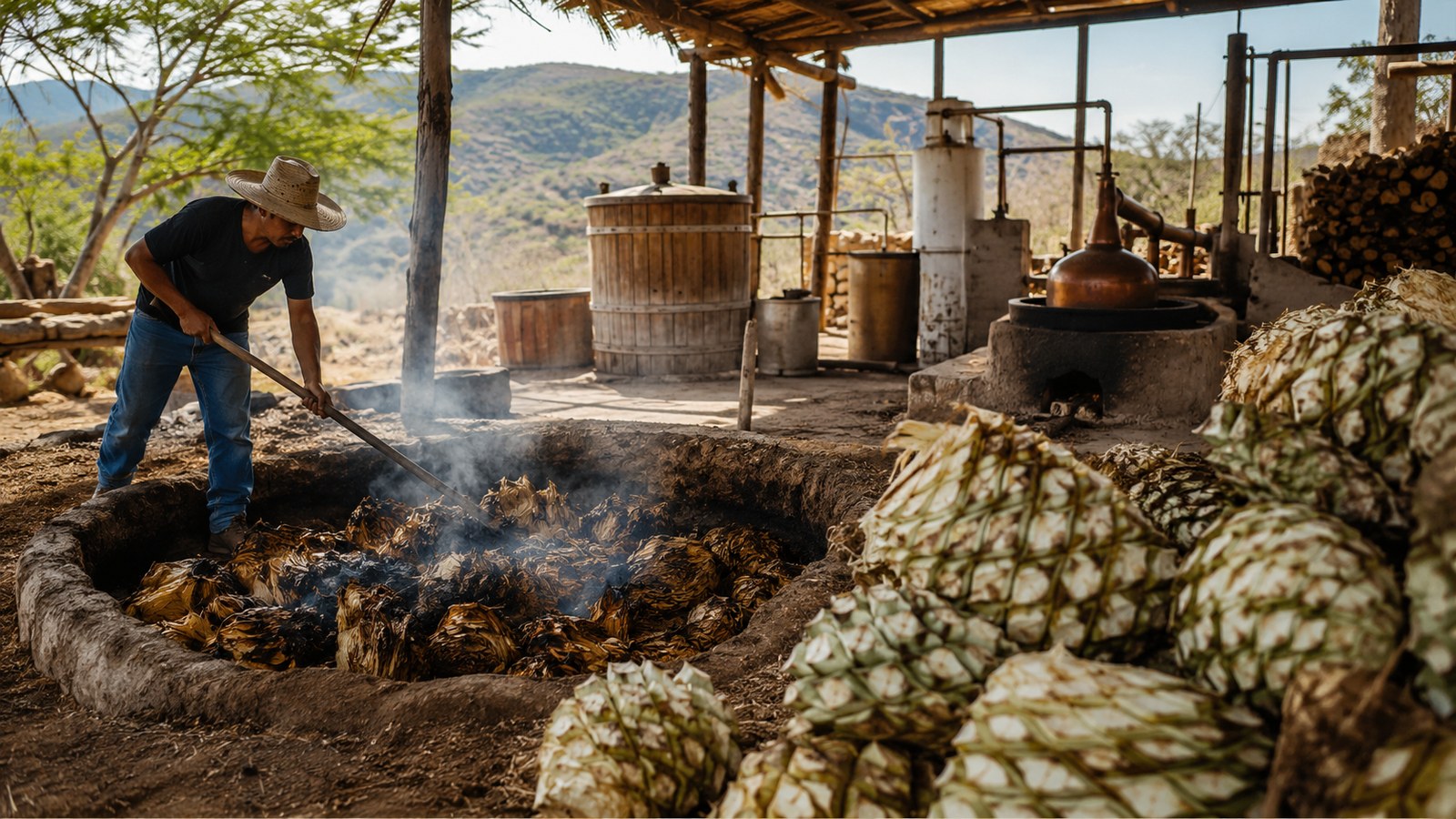
Mezcal is agriculture, labor, fire, fermentation, family knowledge, land, and time. It is also, yes, alcohol. The better tours remember the first list before the last word.
Look for a palenque visit that explains agave varieties, roasting, crushing, fermentation, distillation, sustainability, and the difference between small producers and industrial branding. Ask about transportation before tasting. Do not drive afterward.
Good signs:
- Small group.
- Clear driver / tour plan.
- Producer is credited by name.
- Tasting pace is reasonable.
- No pressure to buy expensive bottles.
- Guide can discuss sustainability and overharvesting.
Bad signs:
- “Unlimited mezcal” as the main promise.
- Five unrelated shopping stops.
- No food plan.
- Driver also drinks.
- Every bottle is described as rare, magical, and somehow available at a discount today.
Worth it? Yes, if you are curious. Skip it if you only want to drink quickly. Oaxaca has cantinas for that; do not pretend it is cultural research.
9. Visit The Museo Textil And Smaller Art Spaces
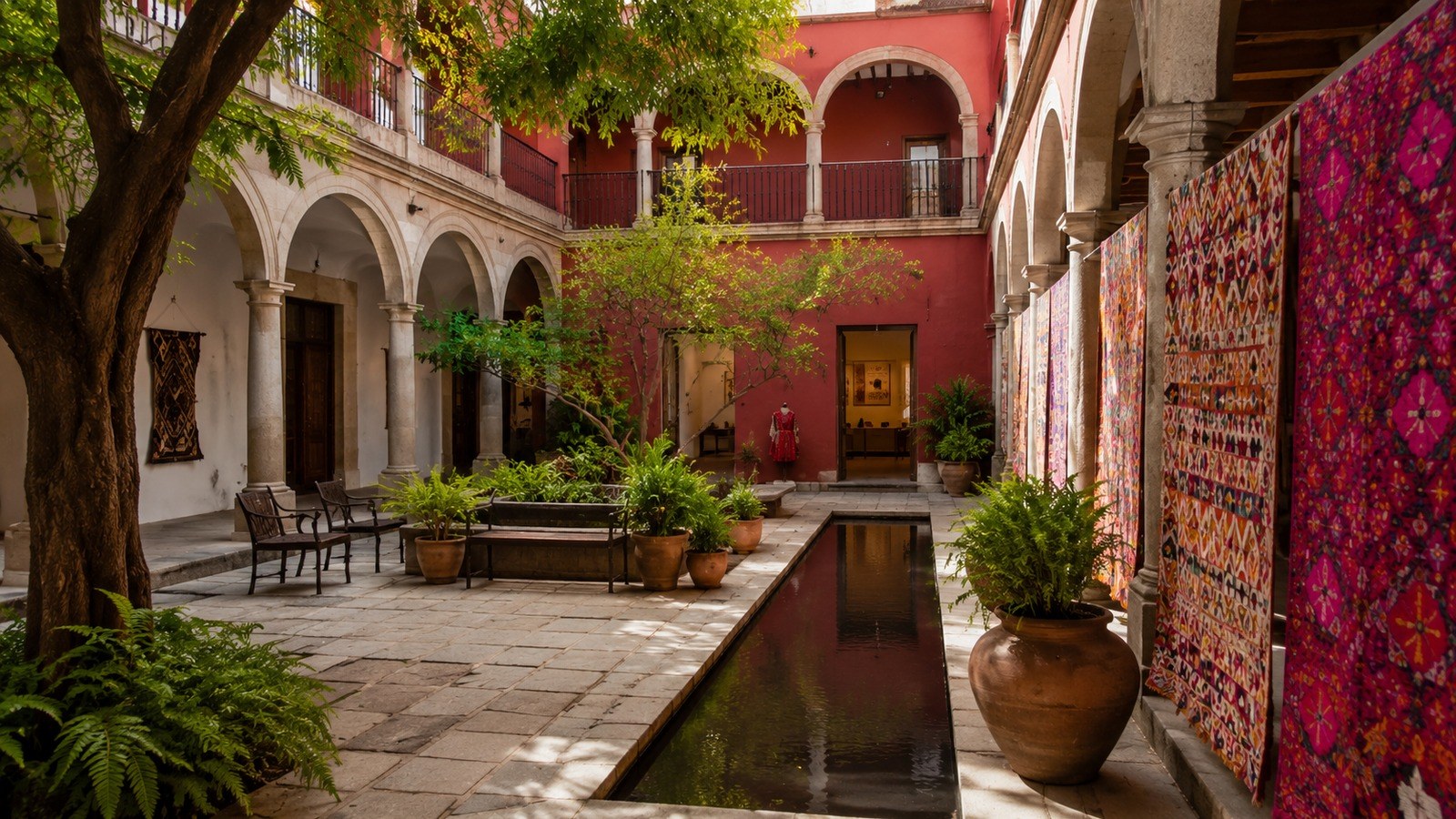
The Museo Textil de Oaxaca is one of the best quiet stops in the city, especially before or after visiting weaving communities. It helps visitors understand textiles as design, memory, technique, identity, and labor rather than just “colorful things to buy.”
Also look for printmaking workshops, small galleries, artist-run spaces, and temporary exhibitions. Oaxaca’s art scene is not separate from politics, land, language, and memory. You do not need to understand everything to appreciate it, but you should resist flattening it into decor.
This is a good rainy-day plan and a good activity for travelers who need a break from heat and long tours.
10. Go To Tlacolula Market On Sunday
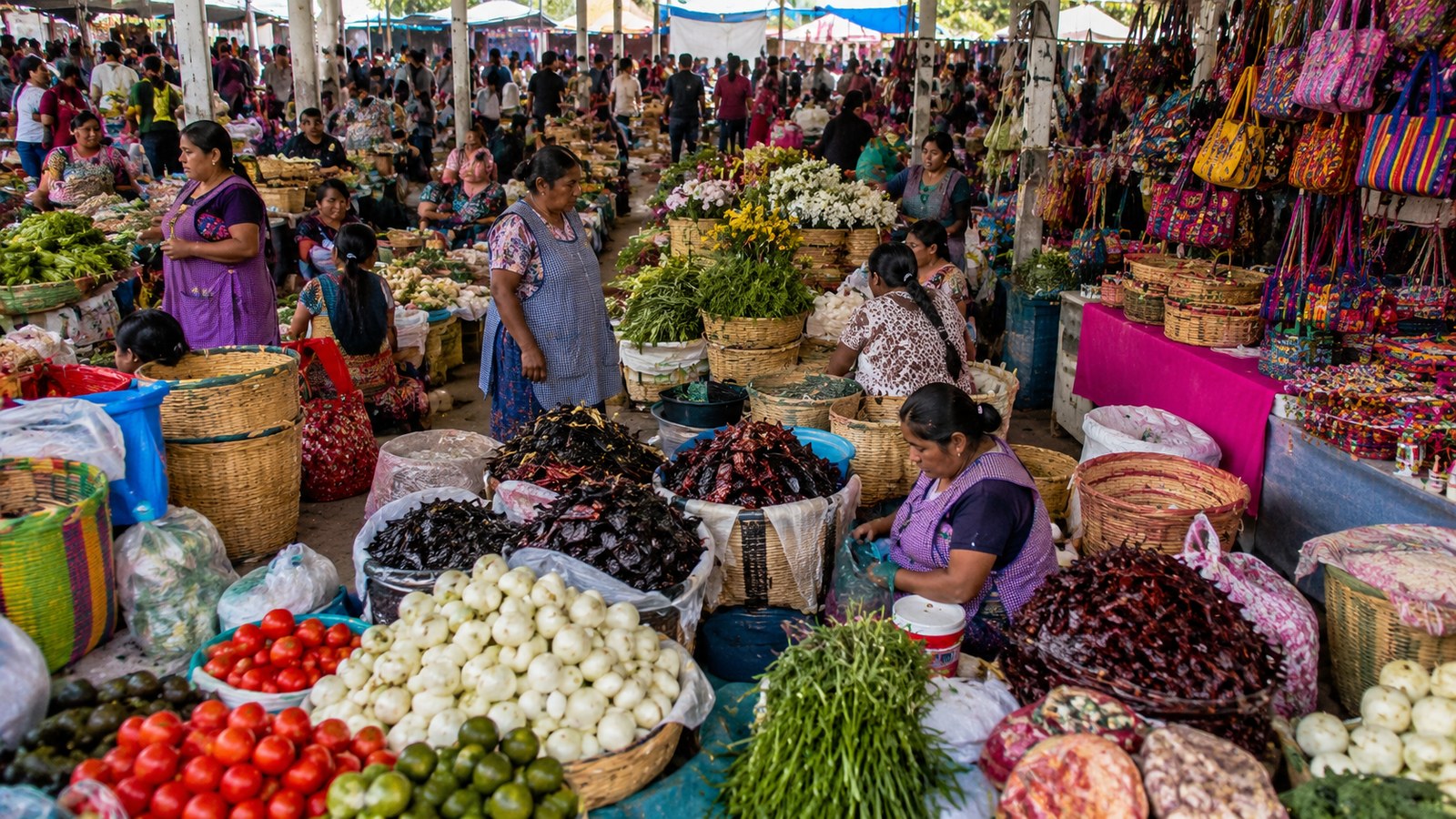
If your timing works, Sunday in Tlacolula can be one of the most memorable market experiences in the valley. It is large, regional, busy, and alive in a way that visitor-focused markets are not. You may hear Zapotec, see families shopping for the week, smell barbacoa, and realize quickly that you are not the center of the scene.
Go with cash, patience, and humility. A guide can help if you want food context or feel overwhelmed. Do not go expecting a curated artisan fair. Go because a market is a living system, not a backdrop.
11. Choose A Craft Village With Intention
Oaxaca’s craft villages are not all interchangeable. Choose based on what you actually care about:
| Village / area | Known for | Best approach |
|---|---|---|
| Teotitlán del Valle | Wool weaving, natural dyes | Spend time, ask process questions |
| San Bartolo Coyotepec | Black pottery | Learn how polishing / firing affects the finish |
| Santa María Atzompa | Green-glazed and contemporary ceramics | Visit workshops, not only shops |
| San Martín Tilcajete / Arrazola | Alebrijes | Buy from makers, not anonymous resellers |
| Ocotlán area | Market, knives, textiles, food | Better with a planned route |
Buy less, better. Ask who made the piece. If the price seems impossibly low, someone is absorbing that cost.
12. Consider Sierra Norte Or Pueblos Mancomunados
For hikers and cooler-air seekers, the Sierra Norte can be a beautiful counterpoint to Oaxaca City. Pine forests, community tourism, mountain villages, and walking routes offer a completely different rhythm.
This is not the best choice for a first two-day trip. It is better with extra time, a good guide or community-based arrangement, and realistic expectations about weather, altitude, transport, and comfort. If your Oaxaca trip is already crowded, do not add mountains just to prove range.
13. Experience A Festival Or Calenda Respectfully
Oaxaca’s festival calendar is one of the reasons the city stays in people after they leave. Guelaguetza, Día de Muertos, patron saint celebrations, weddings, calendas, and neighborhood events can be moving, loud, crowded, and complicated.
The rule is simple: public does not mean yours. Watch where locals stand. Ask before photographing people closely. Do not block processions. Do not step into cemetery rituals as if they were immersive theater. The most beautiful parts of Oaxaca often happen when visitors remember they are guests.
How To Choose If You Cannot Do Everything
If you only have a few days, choose by what you want to remember, not by what looks most famous online.
| Your travel style | Prioritize | Deprioritize |
|---|---|---|
| History-first | Monte Albán, Mitla, Museo de las Culturas | Too many market stops in one day |
| Food-first | Markets, cooking class, food walk, one serious dinner | Rushed valley combo tours |
| Craft-first | Teotitlán, Museo Textil, pottery or alebrije workshop | Anonymous souvenir shopping |
| Nature-first | Jardín Etnobotánico, Hierve el Agua, Sierra Norte | Overpacked Centro-only days |
| First-time classic | Monte Albán, Santo Domingo, markets, one valley route | The coast as a quick add-on |
The painful truth is that skipping something is part of a good Oaxaca trip. You are not failing because you leave without doing every village, every mole, every mezcal bar, and every viewpoint. You are building a trip that leaves the place with some dignity intact.
What I Would Skip
I would skip:
- Combo tours that promise every valley stop in one day.
- Hierve el Agua on a very short trip.
- Mezcal tours built mainly around drinking.
- Craft stops where artisans are treated like performers on cue.
- Central de Abastos on your first hour in Oaxaca unless you have a guide or strong market confidence.
- Filming ceremonies, cemeteries, or private moments without permission.
- Late-night walks back to isolated lodging.
- Any plan that has no room for rain, roadblocks, traffic, or simply being tired.
Reality Check
Oaxaca is not difficult, but it is dense. Food, language, class, indigeneity, tourism, protest, art, poverty, beauty, and commerce all share the same streets. A good things-to-do list should not turn that into a clean little menu.
Plan with respect. Pay guides and makers fairly. Build days that let you notice things. If an activity starts to feel like culture being packaged too quickly for visitors, slow down or choose another version.
Safety, Weather, And Road Context
The U.S. State Department currently places Oaxaca state at an increased-caution level and allows U.S. government employee travel to Oaxaca City, Monte Albán, Puerto Escondido, and Huatulco by approved routes, while applying restrictions to some other areas. Canada also advises travelers in Mexico to avoid demonstrations, monitor local news, and expect disruptions when protests or roadblocks occur.
For activities, that means:
- Add extra time before airport or bus departures.
- Avoid demonstrations and roadblocks.
- Use arranged rides or known taxis at night.
- Check road status before Hierve el Agua, Sierra Norte, or coastal connections.
- Bring water and sun protection for Monte Albán and open-air sites.
- Have an indoor backup for rainy afternoons.
Rainy season can still be a wonderful time to visit, but afternoons may shift plans. Dry season gives clearer skies and stronger sun. Festival periods require earlier bookings and a little more patience with crowds.
Helpful Next Reads
FAQ
What is the number one thing to do in Oaxaca?
For most first-time visitors, Monte Albán is the number one major sight because it combines history, landscape, and a strong sense of place. Go early and give it a real morning.
Is Hierve el Agua worth it?
Hierve el Agua is worth it if you have enough time and want a landscape-focused day. It is not mandatory on a short trip, and some travelers find the road time and crowds make it less magical than expected.
What should I do in Oaxaca if I only have one day?
Do Monte Albán early, then return to the city for Santo Domingo, one market, and a good dinner. Do not try to add Hierve el Agua, mezcal, and multiple villages into the same day.
Are Oaxaca markets safe for tourists?
Most visitors can enjoy Oaxaca markets safely with normal city awareness: keep valuables secure, carry small bills, ask before photos, and avoid wandering into unfamiliar areas at night. Central de Abastos is better with confidence or a guide.
What should I book in advance in Oaxaca?
Book good food tours, cooking classes, Jardín Etnobotánico visits when required, popular restaurants, Guelaguetza / Día de Muertos hotels, and any private driver or tour that matters to your schedule.